A Quick Disclaimer
I’m not a licensed therapist, psychologist, or mental health professional. I’m simply someone who has experienced trauma, spent years trying to understand it, and is passionate about psychology and healing.
I’ve gone back to school to study psychology, spend a great deal of time reading research, and regularly discuss these topics with my own therapist. Many of the ideas I share are information ai learned, but they are also shaped by my own personal experiences, reflections, and opinions.
Nothing I write should be considered professional, medical, psychological, or therapeutic advice. My hope is simply to encourage curiosity, self-reflection, and healthy conversations. If you’re struggling with your mental health or relationships, I encourage you to seek guidance from a qualified mental health professional.
The One?
There are more than 8 billion people in this world. Hundreds of millions live in the United States alone. And yet, when someone breaks our heart, it feels as though they were the only person we could ever love.
We’ve all been there. They leave. They lie. They betray us. They make us question our worth. And in the middle of that pain, our brain convinces us that they’re irreplaceable.
Today, I find myself asking this one question: How many times have I believed that I would never love again?
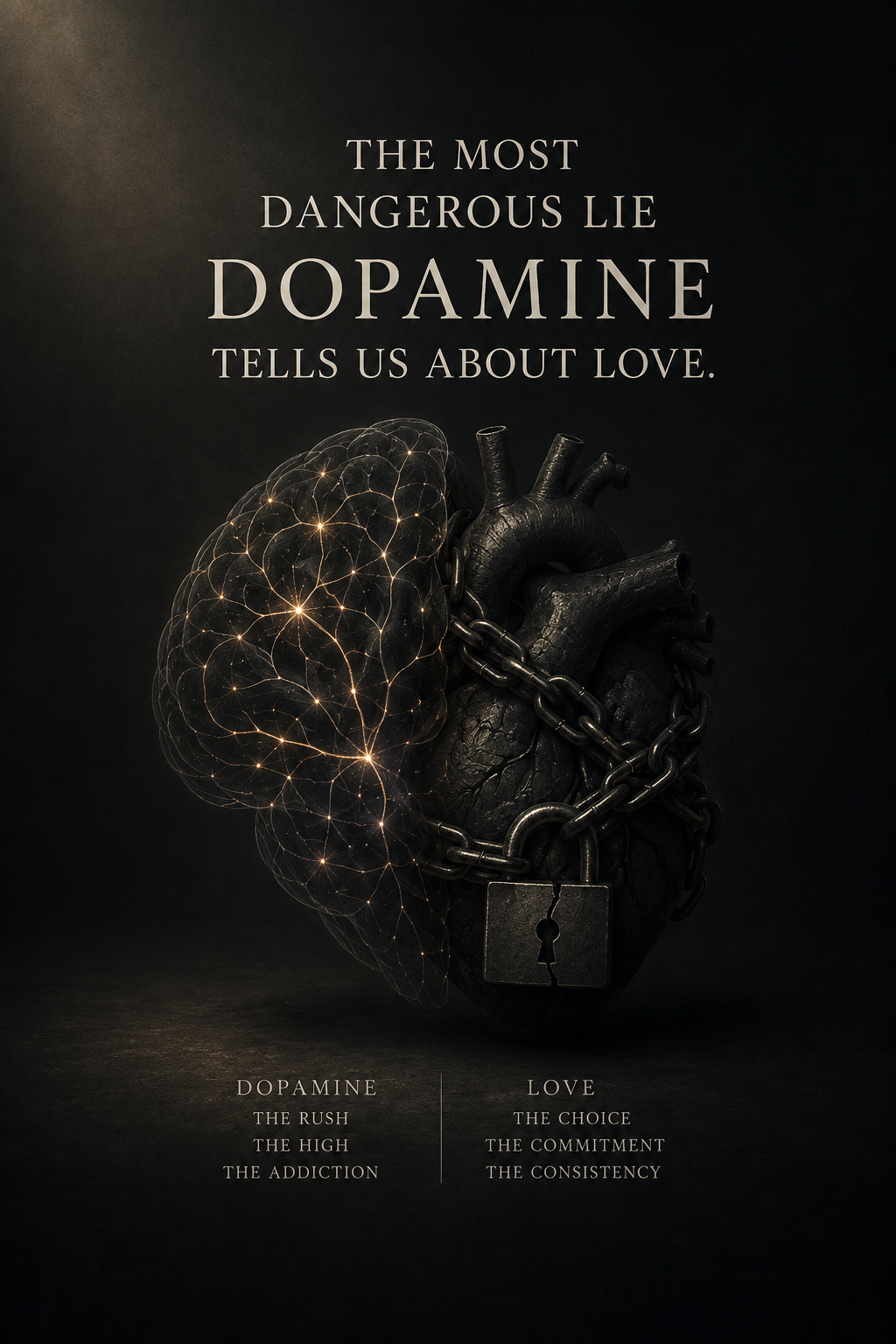
The truth is hard to see in the moment, but the people who hurt us are not the only people we will ever meet. We haven’t come close to knowing even a fraction of the men (or women) who walk this world. There are countless opportunities to find someone who will treat us with honesty, respect, and consistency. But first, we stop searching for “the one” based solely on intensity. We need to stop confusing chemistry with love. We need to face the truth: Intensity is addictive! Addiction is not love!
Nerochemestry
When someone showers us with attention, our brains respond by releasing dopamine, the neurotransmitter associated with reward, motivation, and anticipation. Every notification becomes a potential reward. Every compliment activates the brain’s reward circuitry. Every declaration of desire reinforces the craving.
Then there’s norepinephrine, which heightens excitement, increases your heart rate, sharpens your focus, and makes that person feel impossible to stop thinking about.
As emotional and physical intimacy deepen, oxytocin and vasopressin begin strengthening attachment and pair bonding. These neurochemicals are designed to help us form close relationships, but they DO NOT distinguish between someone who is healthy for us and someone who isn’t.
To your nervous system, attachment is attachment. The neurochemical high can become addictive. Addiction has a way of convincing us we’re in love.
Over time, your brain begins associating that person with relief, pleasure, and emotional regulation. Their attention becomes the reward. Their absence becomes withdrawal. The cycle starts to resemble addiction more than love, but we can’t see it when we’re in its thralls any more than a drug addict can see their use is an issue.
It feels powerful. To many of us, it feels magical.
We convince ourselves this is a special relationship. That it is fate. That it feels so good, so right – at least when it’s good – that it must be real. But neurochemistry isn’t evidence of compatibility. The real question isn’t how they make you feel when everything is exciting. The real question is: Do they stay when life gets hard?
Is this the person you want to stand beside you on your worst days?
Chemistry matters. Attraction matters. We all want that spark. But sparks don’t build lasting relationships. Love isn’t measured during the honeymoon phase, when elevated dopamine and novelty naturally make everything feel extraordinary. It isn’t measured by grand promises, passionate words, or overwhelming emotion. Love is revealed after the neurochemical high begins to stabilize.
It’s revealed in difficult conversations. In disagreements. In disappointment. In grief. In stress. It’s revealed when the novelty wears off, the mask slips, and all that’s left is true character.
It doesn’t sound sexy, I know, but this is where we need to ask ourselves the hard questions: Do you want intensity or long-lasting love? Do you want pleasure at the cost of your mental health? Is this the person you want to stand beside you on your worst days?
The person you choose will be standing beside you on the worst days of your life, when the world is crumbling around you. So instead of asking if it feels right, we need to ask:
• How do they handle conflict?
• Do they communicate, or do they disappear?
• Do they regulate their emotions, or avoid them?
• Do they take accountability, or blame everyone else?
• Do they protect your heart, or only themselves?
• Will they run? Or will they stay?
• Will they tear you down or build you up?
• Will they help you find the strength to stand again when the world crumbles around you?
Real love isn’t sustained by dopamine alone. It’s built through emotional safety, trust, secure attachment, mutual respect, healthy communication, accountability, and consistency. It develops as two nervous systems learn that they are safe with one another, not because of overwhelming intensity, but because of reliability.
Intensity activates your reward system. Consistency builds secure attachment. Those are not the same thing. Don’t mistake fireworks for a foundation. The brightest flames often burn out the fastest. Find the person who builds a fire that keeps you warm for the rest of your life.
…But what do I know? I’ve never been loved.
Leave a Reply